Before the start lineBefore the walk
The First Trail Was Supposed To Be In Daylight
Shinno talked me into Moonshadow, and Graham's advice sent us onto Eagle Trail in daylight first, turning a reckless night-trail idea into one of the first practical lessons of the Perth-to-Brisbane build-up.
The first trail was not supposed to be at night.
That seems obvious now. It probably seemed obvious to sensible people at the time too, which is why some of them tried to point it out.
But sensible was not exactly the dominant mood around me in late 2013. I had only just announced that I wanted to get from Perth to Brisbane on foot, and the idea was still in that dangerous early state where everything sounded possible because almost nothing had been properly understood yet.
I was talking about distances like they were arithmetic. Five sections of 15 km a day. Seventy-five kilometres. Repeat that often enough and eventually, in theory, Brisbane. The exact conversation is probably gone now, but I know Graham Whittaker asked what sort of daily distance I was thinking of and gently suggested that I might want to rethink it. Graham had actual ultra and trail experience, and he did the useful thing of not laughing me out of the room while still quietly steering me away from spreadsheet courage.
That was one kind of help.
Shinno had a different method.
The Bad Influence
Somewhere in that October run of ideas and overconfidence, Shinno organised a Sunday run up Welshpool Road East.
Welshpool Road East is a very effective way of reminding a runner that Perth is not as flat as they like to pretend. It climbs, and it keeps climbing, and by the time you are near the top you are no longer interested in whatever optimistic nonsense you had been saying at the bottom.
At some point near the top, as I remember it, we had to run over what was basically mulch. Not a grand trail. Not wilderness. Not some heroic mountain pass. Just a little rough patch.
Later, over coffee after the run, Shinno joked that we had done a bit of off-road running.
It was a throwaway joke, which is exactly how these things get you.
Because once the word trail was floating around, the next idea did not seem quite as ridiculous as it should have.
Perth Trail Series had an event called Moonshadow. A 12 km night trail. It started at dusk, which sounded magical if you said it quickly and did not think too hard about rocks, snakes, darkness, navigation, or my complete lack of trail-running experience.
I was already registered for a West Australian Marathon Club road event the following morning. That should have been the end of the conversation.
Shinno, naturally, saw it as a feature.
Back-to-back runs, he said. Different terrain. Tired legs. Consecutive days. All good experience for the very long thing I had just told everyone I wanted to do.
This is why I still blame him for Perth to Brisbane, by the way. Not because he forced me to do anything, but because he had an alarming gift for making ridiculous ideas sound like sensible training.
So I signed up.
My first trail event.
My first night event.
The day before a road race.
Excellent decision-making all round.
Maybe Try Daylight First
When I posted about it, the response was not quite the universal “this is obviously a brilliant idea” that I may have been hoping for.
Graham thought the back-to-back logic was good. The training value made sense. But when he realised Moonshadow would be our first proper trail event, his advice shifted from “good training” to “perhaps do not make your first trail experience one where you can only see a couple of metres ahead.”
Again, annoyingly sensible.
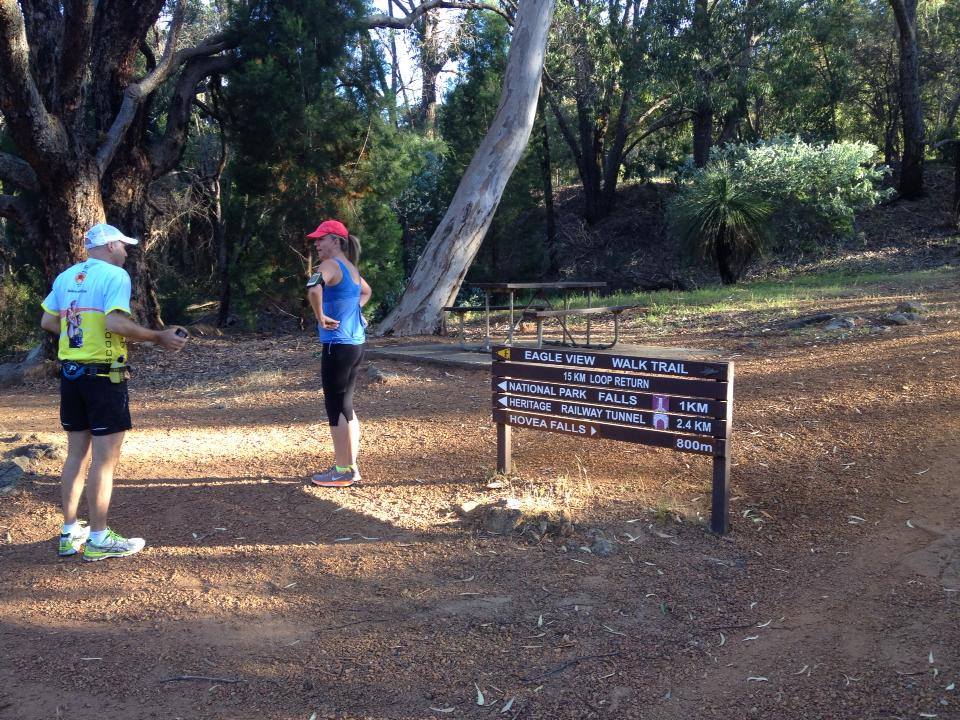
So we scheduled a Rogue Sunday long run on Eagle Trail at John Forrest National Park.
Daylight. Marked trail. Friends. Only about 15 km.
What could possibly go wrong?
I was awake at 3:40 that morning writing that I was excited and bricking it. The trail itself was not the only problem. It was spring in Western Australia, which meant the cold-blooded legless locals were waking up and looking for food and romance, and I had no desire to be involved in either process.
Then we got to John Forrest and started.
Fifteen Became Nineteen
Eagle Trail was beautiful, and hot, and steeper than my road-runner brain had budgeted for.
The first lesson was that trail running was not simply running on a different surface. It changed everything. Stride length. Balance. Attention. Pace. Ego. The amount of time spent looking down instead of admiring scenery. The amount of faith required when a track vanished around a bend and reappeared somewhere that did not look like where you thought you were going.
The second lesson was that “15 km trail” and “the distance we will actually cover” were not necessarily the same thing.
At one point I posted that we had done 12 km, still had 8 km to go, and had got lost. It was a Rogue special. The maths did not support the original plan, but by then the original plan was mostly a fond memory.
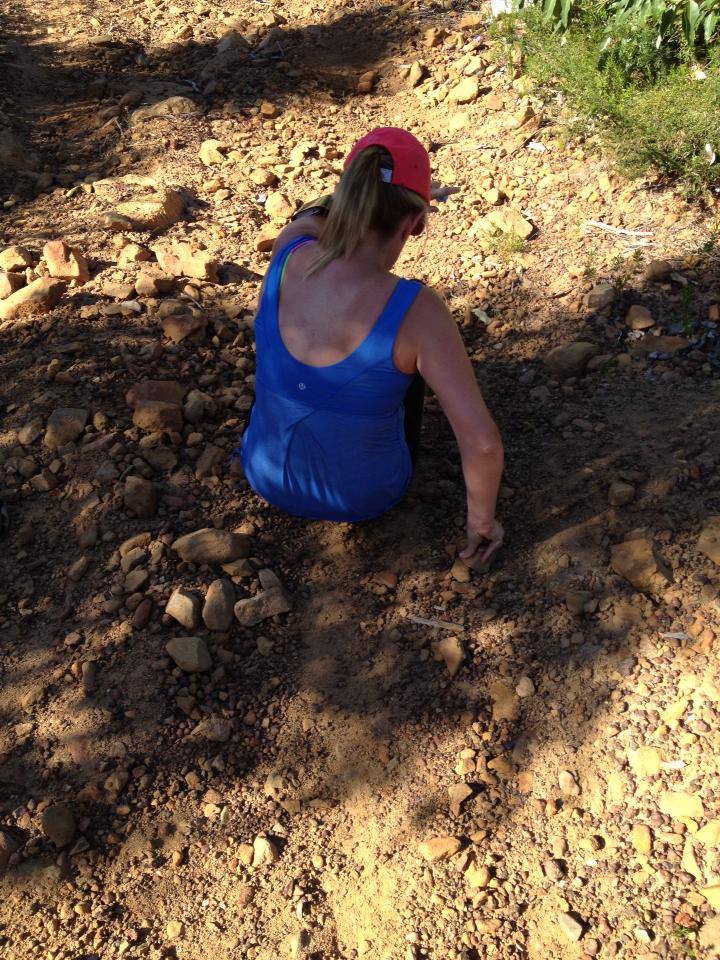
We had enough laughs for it to remain fun, but the practical edges showed up quickly. It was hot. The loose rocky sections demanded attention. Renee slipped on the rough ground. We ran out of water. The final kilometres stopped being charming and became the sort of character-building exercise that is only enjoyable later, once you are no longer doing it.
Shinno finished ahead and, because this was the kind of running community I had somehow fallen into, ran back from the finish to meet us with water.
That part still gets me.
It was funny, yes. It was very us. But it was also an early glimpse of the sort of help that would become essential later. Not dramatic speeches. Not grand gestures. Someone realising you were still out there and coming back with what you needed.
The trail that was meant to be about Moonshadow had accidentally become a small lesson in support crew logic.
The Question Got Bigger
When I wrote about it later that day, I was not pretending I had become a trail convert.
The last 5 km had been horrid at times. I still loved road running. I still liked the cleaner rhythm of 10 km events, half marathons, marathons, predictable surfaces, and routes where getting lost was not part of the entertainment package.
But I could feel the usefulness of it.
In the space of a few weeks I had done a 17 km hill run, a half marathon around the Swan River, Tough Mudder, and now a 19 km trail run with rough terrain and a lot of climbing and descending. None of them looked like Perth to Brisbane, exactly. But all of them asked a version of the same question.
Can you keep going when the easy version disappears?
During marathon training, I had often wondered how I was ever going to run 42.2 km. The answer had been simple and boring and true: keep training, step by step, until the impossible thing becomes a thing you are capable of doing.
Now the question had shifted up several levels.
How was I supposed to cover more than 5000 km?
The answer, irritatingly, was still the same.
Not all at once. Not by wanting it. Not by announcing it on Facebook and waiting for the universe to deliver a support vehicle and legs made of steel.
Step by step.
Training would have to get me there.
Moonshadow
Two weeks later we lined up for Moonshadow.
By then I had at least seen trails in daylight. I knew enough to know that a trail could feel wrong even when it was right. I knew that a marked course could still make you doubt yourself. I knew that “running” was sometimes a very generous word for scrambling, walking, braking, climbing, and trying not to put a foot in exactly the wrong place.
Once the light dropped, that became useful very quickly.
At night, the world shrank to the beam of the headlamp. You could see a few metres ahead and almost nothing beside you. You had to watch the ground, watch for markers, listen to the people around you, and ignore the little part of your brain that wanted to turn every dark gap into evidence that you had gone off course.
Without that daylight experience, I think I would have assumed I was lost.
That was exactly why Graham’s advice had been so good.
Moonshadow was hard work. About 12 km in about two hours, and enough concentration to make it feel bigger than the number. There is a photo from the aid station where I am trying to smile and wave while also keeping my eyes and headlamp on the trail. That sums it up nicely. Public cheer on the outside, active negotiation with gravity on the inside.
Then, after about four and a half hours of sleep, I went to Deep Water Point and did the full 15 km road event.
It turned out Shinno’s argument had worked.
The next morning hurt in the proper way. I started strongly, slowed down, dug in, and finished happy. Twenty-seven kilometres across two days, with trails, darkness, sleep deprivation, a road event, and a small amount of sanity left over.
What It Became
This is why these little pre-crossing memories matter to me.
Those training anecdotes were the idea becoming practical before I knew enough to call it that.
Graham asking about daily distance was not a detail about numbers. It was one of the first reminders that an extraordinary goal still had to answer ordinary questions. How far? How often? On what terrain? With what recovery? With what water? With what experience?
Shinno was definitely being mischievous when he talked me into Moonshadow. Graham’s advice is why we tested the trails in daylight first. Between them, the abstract Perth-to-Brisbane fantasy became something I had to test with legs, shoes, darkness, heat, tiredness, loose rocks, friends, navigation mistakes, and a second run the next morning.
Renee slipping, us running out of water, and Shinno coming back from the finish were not heroic scenes. They were better than that. They were real. They showed how quickly a simple run can become a practical problem, and how important it is to have people around you who laugh, adjust, help, and keep the whole thing moving.
HAA was still a long way off.
I had no crew, no route worth trusting, no refined training plan, and no idea how much the language would change from running across Australia to walking and running, then to the deeper truth of crossing the country on foot.
But by the end of Moonshadow weekend, something had shifted.
Perth to Brisbane was no longer only a big line on a map and a number that sounded impressive in a blog post.
It was starting to ask for a body that could adapt.
And, thanks to a few excellent bad influences, I had started learning the hard way.
Images From The Day