Before the start lineBefore the walk
Time On Legs
The training stopped being about ordinary running goals and became something stranger: walking more, running less, learning fuel and feet, and teaching my body that repeated long days were going to become normal.
The training had to stop being about normal running.
That was harder to accept than it sounds. I liked races. I liked PBs. I liked the clean little story of a start line, a distance, a time, and a result I could put in a blog post. After the first marathon, that structure had helped me understand who I was becoming.
But Hearts Across Australia was not asking me to become a better version of an ordinary runner.
It was asking me to become someone who could get up and move for hours, then do it again, then do it again, then wake up sore and do it again anyway.
By October 2014, after some frustrating weeks that included a fall during an event and a gastro virus, I had to simplify. I could not train for every possible version of myself at once. The goal became blunt: cover more distance on foot than I had ever covered before, almost daily, for months.
I called it time on legs.
Walking More
That little phrase changed the training.
Time on legs was not glamorous. It did not sound like a heroic training plan. It sounded like what it was: hours of moving, hours of impact, hours of finding out what happened to my feet, back, stomach, shoes, socks, head, patience, immune system, and ability to keep going when I was bored, tired, cold, sore, or over it.
It also meant walking more.
That was a mental adjustment. I had spent the previous couple of years becoming a runner. Running had been the identity shift. Running was the thing I had once thought I could not do. Running had carried the no more mr fat guy story from a private health crisis into marathons, Rogues, Heart Foundation conversations, London, and the beginning of HAA.
Now I had to accept that walking was not a lesser form of the work.
Walking let me spend longer on my feet with less damage. Walking taught patience in a way running often avoided. Walking let the distance accumulate without every session turning into a recovery crisis. Walking was going to be the practical language of much of HAA, whether my ego liked it or not.
The target in my head kept getting bigger: 25 km or more regularly, then weeks close to 200 km, then eventually the reality of 50 to 60 km days.
That was the shape of the life I was training for.
Harder To Break
Markus had a way of making the unreasonable sound like the next obvious step.
In November he threw a challenge at me: 100 km in four days. Friday 20 km, Saturday 30 km, Sunday 30 km, Monday 20 km. On paper it was just arithmetic. In real life it was sleep, work, weather, food, soreness, timing, shoes, and the little voice that says it would be perfectly reasonable to skip today because yesterday was already big enough.
That was the point.
HAA was not going to care if I felt like it. The Nullarbor would not adjust itself around a niggle. A plan built around 50 km days would not survive if I treated every ache as a stop sign. I had to learn the difference between warning pain and ordinary protest. I had to learn how to move tired without becoming stupid about it.
The first 100 km block taught me that the physical work was only half the thing.
The mental work was getting out the door. Again. And again. It was not bargaining with the alarm. It was not letting a cold morning become a vote on my future. It was noticing the excuses and moving anyway.
My Hokas were helping. Shoes that reduced the pounding on bones and joints were not a luxury anymore. They were part of the infrastructure. So were socks, hydration, nutrition, recovery, iron, sleep, food tracking, and learning what happened when the immune system started waving a little flag.
The body could adapt, but it needed patience.
And I was not always naturally gifted in the patience department.
The Next Block
Once 100 km in four days became possible, the training logic did what training logic always does.
It moved the target.
The next big block was 120 km in four days. That one became messy, which made it more useful. An ABC Radio interview took a chunk out of the schedule, and suddenly the neat arithmetic was gone. After a 31 km trail run on the Sunday, I had a choice: do a smaller run and leave Monday enormous, or get my head in gear, go back out Sunday evening, and claw the block back into shape.
I went back out.
The number was useful, but the better lesson was the disruption. HAA would be full of disrupted arithmetic. Plans would be interrupted by media, weather, fatigue, towns, people, meals, laundry, vehicle problems, sleeping arrangements, and whatever else four months on the move could throw at us. A perfect training block teaches fitness. A disrupted one teaches adaptation.
Late that night, getting the distance done, I was rehearsing the act of not folding when the day stopped looking tidy.
Trails
At the same time, trails came into the picture more seriously.
That still amuses me because the original version of me had no interest in trail running. Roads were hard enough. Marathons were hard enough. Running where there were rocks and hills and heat and the possibility of looking even more ridiculous seemed unnecessary.
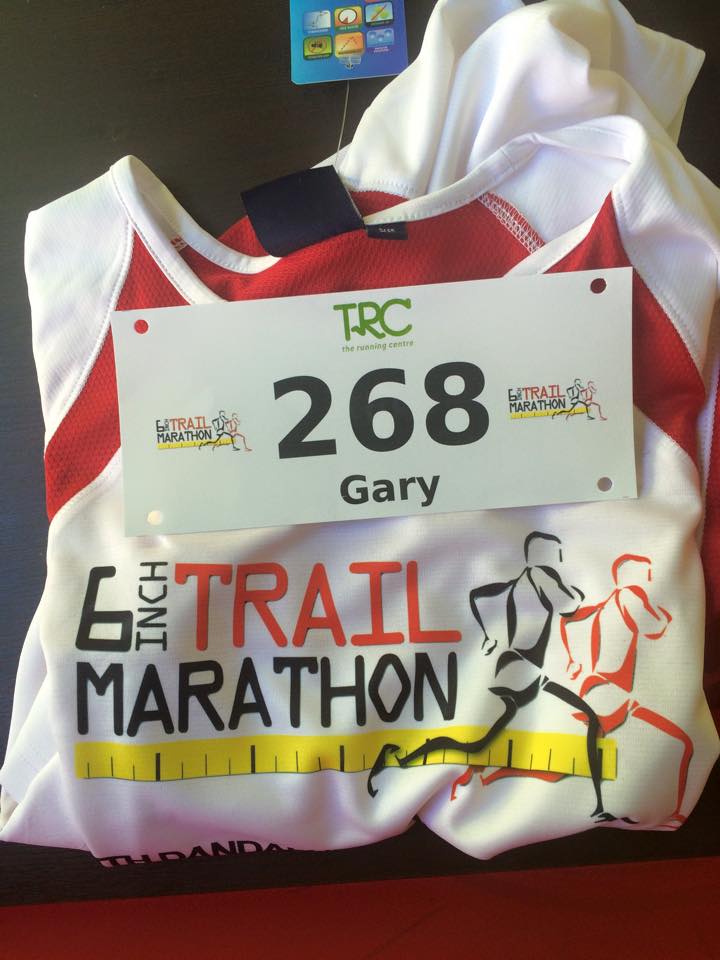
But the 6 Inch Trail Marathon became a key target. Forty-seven or so kilometres of trails, hills, gravel, discomfort, and the sort of terrain that makes a person negotiate with every poor life decision that brought them there.
It was perfect.
Not because HAA would be a trail race, but because it would be uncomfortable. There would be camber, gravel shoulders, uneven surfaces, heat, fatigue, and long sections where the body would want a more civilised hobby. Trails helped me build strength and humility. They also gave me another community of people who thought long, difficult things were a perfectly acceptable way to spend a weekend.
By the end of 2014 I was not simply training for an event.
Training had become the event before the event.
The public story might still have been about the big line from Perth to Brisbane, the Heart Foundation, and the idea that ordinary people could do extraordinary things. But underneath that story was a quieter transformation. I was learning how to live the daily mechanics of HAA before HAA began.
Walk more.
Run sometimes.
Eat properly.
Fix the shoes.
Test the socks.
Listen to the body without obeying every complaint.
Let the numbers get bigger.
Get up again.
There is a version of this story where the October 2013 idea jumps neatly to the May 2015 start line. That version misses the whole point.
The bridge was not “then I trained”.
The training was where the idea started becoming a body.
Related Videos
Training Report - Wednesday 26th November
HAA training report video from the early time-on-legs build-up.
Open on YouTubeHAA Update - Friday 28th November
HAA update video from the November 2014 build-up.
Open on YouTube8 hour long walk - part 1
Part one of a long-walk training video from the HAA build-up.
Open on YouTube8 hour long walk - part 2
Part two of a long-walk training video from the HAA build-up.
Open on YouTube#HAA2015 training run vlog - dec 4th 2014
HAA training run vlog from 4 December 2014.
Open on YouTubeNot The Run I Was Expecting!
HAA training vlog from the December 2014 preparation block.
Open on YouTubeSmall Update On Training and Shoes!
HAA training and shoes update from the December 2014 preparation block.
Open on YouTube#HAA2015 training run vlog - dec 5th 2014
HAA training run vlog from the South Perth foreshore.
Open on YouTube#HAA2015 training run vlog - dec 7th 2014 - part 1
Part one of the final long-run vlog before the 6 Inch Trail Marathon.
Open on YouTube#HAA2015 training run vlog - dec 7th 2014 - part 2
Part two of the final long-run vlog before the 6 Inch Trail Marathon.
Open on YouTube#HAA2015 training run vlog - dec 7th 2014 - part 3
Part three of the final long-run vlog before the 6 Inch Trail Marathon.
Open on YouTube#HAA2015 training run vlog - dec11th 2014
HAA heat-training vlog from 11 December 2014.
Open on YouTube#HAA2015 training run vlog - dec 12th 2014
HAA training run vlog from 12 December 2014.
Open on YouTubeImages From The Day