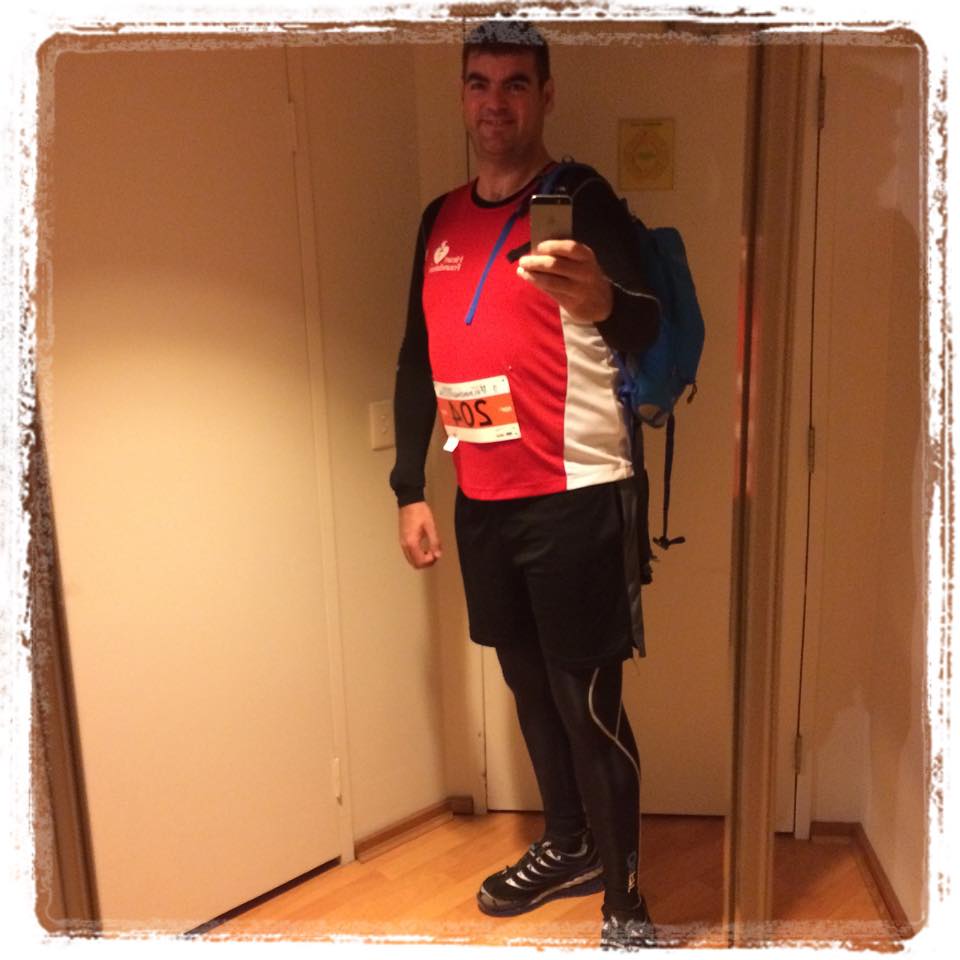
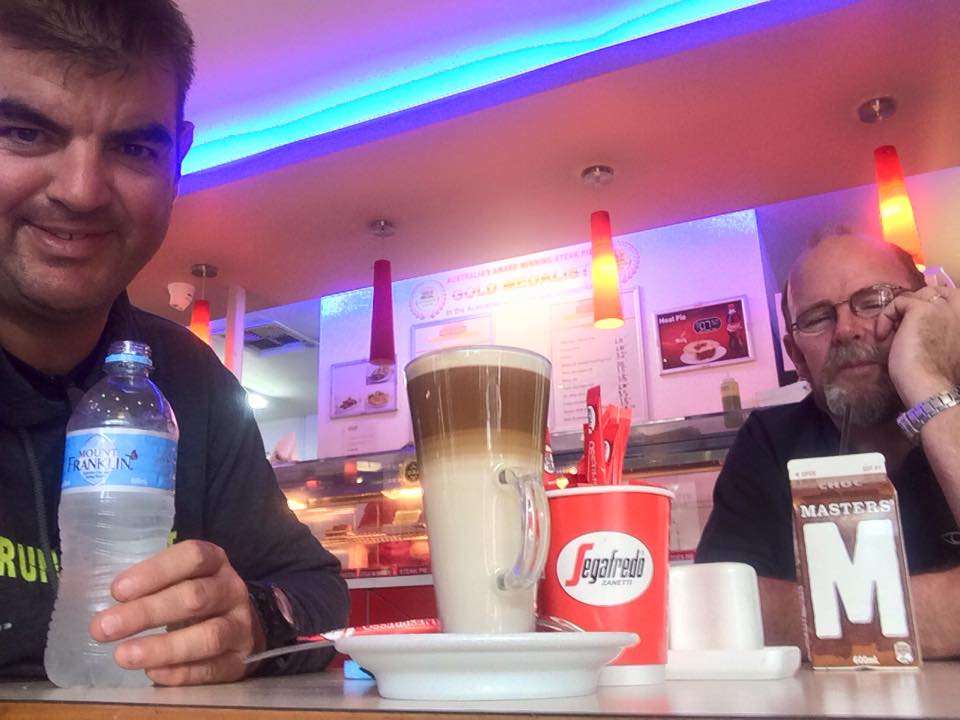
Before the start lineBefore the walk
Walking Back From Bunbury
A month before departure, Bunbury became the final big rehearsal: a 50km PB, a stripped-down backpack, three days walking back toward Perth, and a practical education in feet, roads, logistics and help.

The Bunbury idea was ridiculous in a very specific way.
Not ridiculous like the original Perth-to-Brisbane idea, which was so large it could hide inside its own abstraction. Bunbury was ridiculous in a way I could pack into bags.
Run a 50 km ultra on Sunday.
Rest overnight.
Send most of my gear back to Perth with a friend.
Keep enough in a backpack to survive.
Walk roughly 170 km back toward Perth over three days.
That was the plan. Or at least that was the shape of the plan before reality started doing what reality does.
Clinton’s Fault
There is a lovely kind of danger in being surrounded by running friends who think your bad ideas are funny before they become practical.
At that stage I had been doing a lot of walking to events, running the event, and walking home again. Enough that Clinton Bishop, aka Batman, made a throwaway comment that I would probably walk to Bunbury.
He meant it as a joke.
Unfortunately for everyone, I have a long history of treating jokes as project prompts.
Walking to Bunbury before the 50 km was not sensible. But the idea had done its work. After talking it through with Markus, it shifted into something that was still mad but more useful: get to Bunbury by car, run the event, then walk back toward Perth afterwards.
That made the return trip a rehearsal.
Not a clean, noble, unsupported stunt. A rehearsal. A test of repeated long days, solo movement, heavy pack, gear selection, fuel, shoes, socks, route decisions, accommodation, getting tired, asking for help, accepting help, and seeing what happened when my body had to keep moving after an ultra.
That was exactly the kind of learning I needed a month before departure.
The Packing Problem
The night before leaving for Bunbury, the plan already looked funny from the inside.
I needed enough gear for a well-supported 50 km event. Tailwind, two pairs of Hokas, USANA supplements, Lightfeet socks, compression gear, shirts, singlets, hydration packs, water bottles, casual clothes, chargers, laptop bits, watch cables, toiletries, towel, the lot.
Then I needed to strip that down.
HAA would have a crew and a vehicle. Bunbury-to-Perth would not, at least not in the same way. So I had to take a temporary version of the big system, send most of it home with Jacqui, and leave myself with the backpack version of survival.
That difference mattered.
A support crew turns logistics into a shared machine. A backpack turns logistics into weight.
I was about to learn that very quickly.
There was another packing problem too, and this one came with lycra.
When I first started running, I swore I would never wear the stuff. Lycra was for proper runners, serious people, people with calves and race plans and no shame about looking aerodynamic in public. I was not that person.
Then Chris Lark from Runningworks messaged me and asked what I planned to do about compression gear for the walk/run to Brisbane.
That was how I ended up at his premises, talking through tights, long sleeves, practical protection, and the fact that crossing Australia might require me to surrender a few old opinions. Chris gave me a first set to try: compression shorts, long compression tights, a long sleeve compression top, and a Runningworks hat.
Bunbury-to-Perth became the test. The tights went under shorts. The long sleeve compression top went under the rest of the kit. The compression mattered, and my arms and legs were better protected from sun, wind, dust, gravel, and the general punishment of being outside all day.
Once I knew it worked, I arranged to buy a few more sets from Chris. He looked after me with a generous discount, then delivered them at parkrun, because of course that was where this sort of thing happened by then.
By the time HAA properly started, that had become my uniform: compression tights with shorts over the top, long sleeve compression shirt with the HAA shirt over it. I had gone from “I will never wear lycra” to walking across Australia wearing lots of it.
Ash gave me a lift to Bunbury. That alone was part of the support pattern that had already formed around HAA: someone stepping in, someone making the next piece possible, someone helping the mad idea stay in motion.
On the Sunday, I ran the Bunbury 3 Waters 50 km.
And I ran it well.
Almost 50 minutes off my 50 km PB. A medal. A post-race meal with running friends. The familiar glow of having done a big event and survived it. This time the glow had a catch, because the event was not the end of the weekend.
The real rehearsal started the next morning.
The First Lessons
Day one of the walk back was blunt.
South West Highway was busier than expected. Trucks mattered. Hats needed gripping when vehicles passed. The thin bitumen strip was better than walking the gravel all the time, but I had to move onto the gravel when traffic came through. Gravel hurt more, slowed me down, and had camber that seemed personally committed to making my feet and legs miserable.
That is the kind of detail that never appears in a motivational slogan.
But it is the actual substance of crossing a country on foot.
The lessons came quickly. A proper rugged torch would be needed. The iPhone flashlight was not a plan. Tailwind was excellent, but pies and chocolate bars were not going to be a full nutrition strategy for the big crossing. USANA shakes and bars helped. Sunscreen needed topping up, and spray sunscreen was not the answer. Lightfeet socks were doing a good job with blisters, but clothing choices elsewhere needed the same attention.
The backpack was too heavy.
That was one of the big ones.
Carrying everything made sense because I was mostly unassisted, but it weighed me down in a way that would not work for HAA. The lesson was not “be tougher and carry more”. The lesson was “use the support system properly”. Keep the day load minimal. Let the crew and vehicle do what they are there to do. Save the body for the actual movement.
By the end of day one, I could already feel the difference between doing one big event and backing it up with another long day.
I had recovered from an ultra enough to go and walk an ultra.
That was encouraging.
It also hurt.
Fast Forwards
The car lifts and route adjustments matter, and not as failure.
On day one, Matty found me north of Brunswick Junction and checked I was okay. I gratefully accepted a lift to Harvey, which helped me get back on schedule for a room at Yarloop. I arrived there around dark, enjoyed a shower, steak, beer, and the kind of sleep that only arrives after the day has removed all your objections.
On day two, the numbers stopped behaving. By mid-afternoon I still had too much distance left for the day to be viable. The sensible choice was to make Pinjarra, then find a lift, bus, taxi, or whatever it took to North Dandalup.
Live to walk another day.
That phrase mattered.
This was training. Time on feet. A solo rehearsal with a heavy backpack. Every step added physical and mental strength, but stubbornness was not the same as good judgement.
The accommodation plan then produced another lesson. I had booked a room in Pinjarra, but when I arrived the motel was full. They had tried to phone to confirm, could not get through, and had let the room go.
Enter Michelle’s Uncle Darrell and Aunty Denise.
Darrell picked me up and took me back to North Dandalup, where I was welcomed into their home, showered, fed, and given a proper night’s sleep. It was another fast forward by car, yes. It was also exactly the sort of generosity and practical problem-solving that would keep appearing throughout HAA.
On day three, Pete Liddicoat from Visual Reality Productions captured photos and video, including the still I still love: me walking along the Southwest Highway with kit hanging from me, caught somewhere between exhaustion, determination, and “what have I done?”
There was another car jump to Byford. Coffee, cold water, food. A half marathon or so of walking left. Later, Nat delivered coffee and treats and took the backpack off me, making me 15 to 20 kg lighter for the final push. There was chicken and chips on Ranford Road. There was the strange little despair of finding a dead end in Hilbert and lying on the ground for a moment because sometimes the map has a sense of humour you do not share.
Then there were the last kilometres, long and slow and painful.
Feet
The debrief was all about feet.
Right little toe blistered. Another blister between the big toe and second toe. Bruised feeling under the forefoot. Tender toe tips and nails. Sore soles. Dry, red, itchy tops and ankles.
In other words, data.
The good news was that the rest of the body had not fallen apart. Legs, back, shoulders, arms: mostly okay. The shoes had done a decent job overall, but specific issues needed answers. Toe box space. Insoles. Body glide or Vaseline on the tops of the feet. The way feet spread under repeated long days. Whether shoes might need surgery before HAA did.
The numbers were startling once they landed.
Roughly 180 km in four days, including a 50 km PB and about 130 km of walking, much of it on gravel and rough ground.
One month before departure, that was the strongest proof-of-concept I had.
Not perfect. Perfect would have been less useful.
Bunbury taught me that HAA would be solved through movement, adaptation, support, and humility. It taught me that the plan could bend without the mission breaking. It taught me that friends would appear in the story in ways I could not script. It taught me that my feet were going to be both the engine room and the complaint department.
Most of all, it gave me a threshold.
When Hearts Across Australia began in May, the first three days would not be entirely unknown. I had done three days from Bunbury. I had felt the accumulated damage. I had woken up and continued.
But on Day 4 of the actual crossing, I would be beyond the rehearsal.
That thought was both terrifying and exactly why Bunbury mattered.
Related Videos
Bunbury 50k and Walk to Perth
HAA build-up video covering the Bunbury 50k and the walk back toward Perth.
Open on YouTubeImages From The Day