no more mr fat guyBack in the days of no more mr fat guy
A Dream With Other People In It
When Kate from Running In The Rain asked about my running dream, the answer was no longer just a marathon. It had become Uluru, London, other people's stories, and the first rough shape of something bigger.
Kate asked a simple question.
What is your running dream?
It was the sort of question running pages ask all the time. Friendly, open, harmless enough. You answer with a race, a time, a distance, a medal, maybe a place you have always wanted to see. Then everyone nods along and says lovely things because runners are dangerously good at encouraging each other into expensive shoes and terrible decisions.
But on 30 July 2013, the question landed in the middle of a strange week.
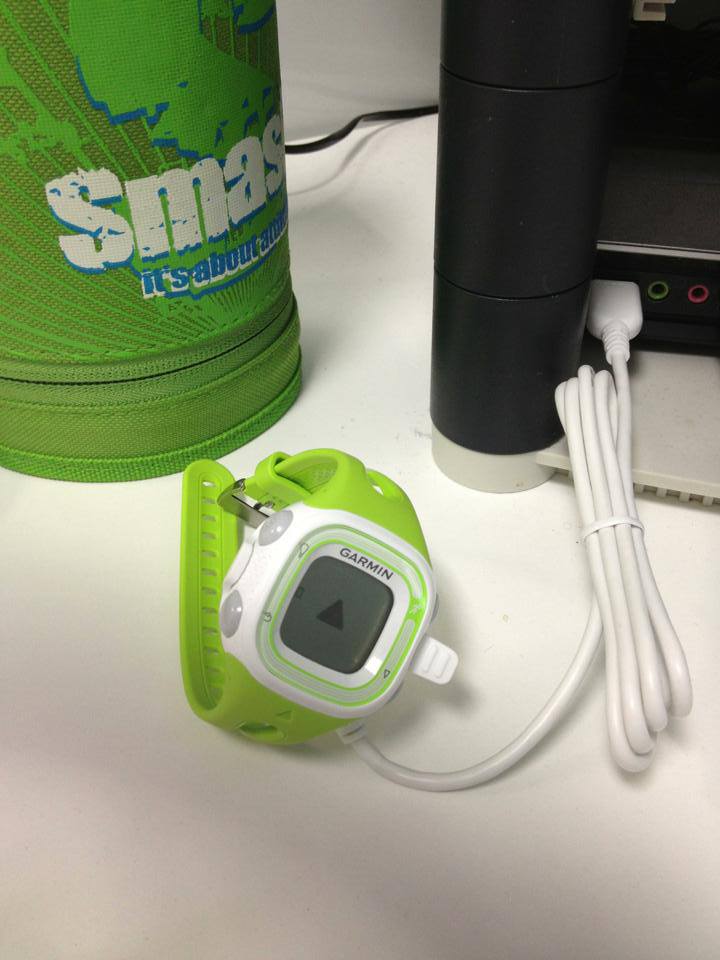
I had just written the scariest post of my life, the one where I admitted the marathon had been a vehicle and that I wanted a life in full colour. I had gone back to Fremantle, chased a sub-60 10 km, missed it, still run a personal best, and learned that I could be disappointed and proud at the same time. I had bought a Garmin because I no longer missed running with music, but I did miss the numbers. I had used the Macmillan calculator to turn that 1:06:21 into a new half-marathon goal.
The normal running answer was there if I wanted it.
Faster 10 km.
Sub-2:30 half.
Another marathon.
But the honest answer had started to spread far beyond the next race.
Eighteen months earlier, my running dream would have been simple: finish a marathon. Not run one well. Not travel the world collecting medals. Not build anything around it. Just finish. Get from the start to the end without the old self-belief collapsing underneath me.
By July 2013, I had done that.
So when Kate from Running In The Rain asked the question, the answer was no longer only mine.
That was the strange part.
After The First Impossible Thing
The marathon had changed the scale of things.
Not in a sensible way, obviously. Sensible people finish one marathon slowly, recover carefully, choose a nice manageable next target, and perhaps buy one of those little oval stickers for the car. I had finished Perth Marathon in six hours and forty-seven minutes, gone through a week of emotional hangover, declared that the marathon had only been the vehicle, and started talking about changing the world one person at a time.
Subtle, understated stuff.
But underneath the big language, something simple had happened.
I no longer had the same relationship with impossible.
That word had lost some of its authority. It still had teeth. It still frightened me. But it no longer got to make the final decision. I had proof now, not theoretical proof, not motivational-poster proof, but proof in the body. I had trained. I had suffered. I had crossed the finish line. The old claim that I was not the kind of person who could do big things had been weakened in public.
That opened a door I could not easily close.
First came London.
I had only just admitted, in the July 24 post, that I had always wanted to run the London Marathon. Never told a soul before, but there it was. London had been sitting quietly somewhere in me for years, attached to television memories, home-country feelings, and the idea of ordinary people carrying extraordinary stories through a huge city.
Then came Uluru.
A few days before Kate asked her question, I had started looking at the Australian Outback Marathon. The time limit was eight hours, which immediately made it feel possible in a way my faster dreams did not. The race mattered, but so did the place. Uluru had always carried that pull for me, the kind of iconic Australia I had moved across the world to see. Not the tidy tourist version. Something bigger, older, stranger, and more compelling.
I wrote that this time next year I would be recovering from completing it.
That was a bold little sentence.
It was also a clue. My running dream had started attaching itself to places. London. Uluru. Every major Australian city. Places of natural beauty. The world was beginning to look less like something to admire from a distance and more like somewhere my feet might actually go.
But even that was not the whole answer.
Five Hundred People
The no more mr fat guy page had changed after the marathon.
For about eighteen months, it had hovered around 120 likes, mostly friends, family, and people I had badgered into following along. It was public, technically, but still small enough to feel like a corner of my own life.
Then Perth Marathon happened.
In the four weeks after I finished, the page almost quadrupled. I was stunned by it. New people arrived, commented, encouraged, shared their own stories, and treated the whole odd thing as though it belonged to them too. The page was becoming a community.
That helped because the week after the marathon had not been all triumph. There had been darkness in it, and confusion, and the emotional flatness I called the longest hangover ever. Knowing there were people out there who could understand, appreciate, or at least sit with those moments was surprisingly powerful.
It also changed what I thought the page was for.
By mid-July I had already tried to explain the different parts of the website to the growing crowd: daily posts for training and whatever nonsense was passing through my head, longer blog articles for the deeper and more sarcastic stuff, and the shit-sorter files for other people’s stories.
Those stories were important.
Not as content. Not as a feature. As evidence.
The point was simple: ordinary people could turn their lives around, achieve great things, and live the lives they dreamed of. Not because I said so, but because the stories were there. Real people. Real mess. Real change. Some of them were dealing with things far bigger than my own beginner-running drama, and still finding ways to move.
On 21 July, I wrote that I had become switched on to storytelling, story sharing, and the power of enabling that for others.
That line is one of the hinges.
The marathon gave me proof for myself.
Other people’s stories showed me proof could travel.
Top Secret, Naturally
By 30 July, the page had passed 500 likes.
That was the deal I made with Kate: if the page went over 500, I would share the thing I had written in a private group. It had been labelled, with all due maturity, top secret. The sort of thing you write when you are trying to sound playful because the idea underneath is making you nervous.
The domain was RunnersForChange.com.
I liked the name because it was direct. It was not trying to be clever or witty. It cut straight to the heart of what had started to feel like a personal mission.
The basic idea flowed from the shit-sorter files. I had been interviewing people, editing their answers, and sharing their stories once a week. It was fun, but it was also slow, manual, and limited by my time. There were thousands upon thousands of stories worth sharing, each one with the potential to spark something in someone else. A word here. A phrase there. A common struggle. A goal. A failure. A way through.
People do not always know the power their words can have.
That thought had got under my skin.
My old world was software and web development, so my mind went where it naturally went: build a system. Let people create accounts. Let them put their own stories online. A sort of self-service version of the shit-sorter files.
In my head, each person would have a profile: photo, name, tagline, brief intro, links to their online places. Then they could publish sections about their story, their causes, their goals, and their achievements. Not boxed into a questionnaire. Not forced into my structure. Just enough shape to help people share what mattered.
Looking back now, I can see the naivety in it.
I can also see the truth.
I did not want to collect stories because stories were useful marketing material. I wanted people to be able to put their evidence somewhere. The evidence that change had happened. The evidence that the person reading it was not alone. The evidence that ordinary lives are full of turning points, private battles, messy beginnings, ridiculous goals, small wins, and hard-earned courage.
That is not a bad instinct.
Even if the first version of the plan was very much written by a man high on running, caffeine, possibility, and insufficient sleep.
Why Runners?
The obvious question was in the name.
Why runners?
The honest answer was that runners were the people I was meeting.
The Facebook running community had opened around me after the marathon. Pages like Running In The Rain, Running from Stroke, and others were not abstract audience segments. They were people. I was shaking hands at events, chatting online, reading stories, finding encouragement, giving encouragement, and discovering that running pages were often full of people who had changed their lives in complicated, unsanitised ways.
Running had changed my own life, energy, perspectives, attitudes, and appetite for being alive.
It had taken me from a fear of becoming a heart-attack statistic to a marathon finish. It had given me hours alone with my thoughts. It had helped me find the old voices and argue with them. It had given me a body that could do things, and that body had given my mind less room for certain kinds of nonsense.
So yes, runners.
But I knew even then that the idea was not exclusive. Walkers could use it. Cyclists could use it. Anyone who had found change through movement could use it. Running was simply the language I now understood best, and the community standing closest to me at the time.
The deeper idea was not that running is magic.
The deeper idea was that movement can become evidence.
You begin somewhere. You repeat the small thing. You slowly become someone who can do a larger thing. Then one day you look back and realise your pace, distance, and weight are the visible changes. Underneath them, what you believe about yourself has changed too.
That is a story worth telling.
What Change?
I had also started thinking about change at different scales.
There was individual change first, because that was the only place I had any real authority to speak from. Running had changed me. It had changed my energy, health, confidence, habits, and sense of possibility. Practically everyone I was meeting had some version of that. Weight loss. Recovery. Grief. Confidence. Mental health. Community. A body reclaimed. A life restarted. A future that no longer looked quite as fixed as it once had.
Then there was community change.
Runners tend to gather around causes. Not always neatly, and not always with solemn speeches, but events and fundraising and local support were everywhere. Even without formal charity, healthier and happier people change the rooms they walk into. Families feel it. Workplaces feel it. Local communities feel it. A person who becomes less trapped by their own misery has more to give.
Then I let myself think bigger.
Not in a tidy utopian way. I was not imagining that everyone would become perfect because a few of us had discovered parkrun, energy gels, and the questionable joy of early mornings. But I could imagine a world with more people who were healthier, happier, less angry, less bitter, more compassionate, more alive.
The line from one changed person to a better world is not straight.
It still felt worth following.
That was the shape of Runners For Change in my head: not necessarily a global organisation, but a movement. People around the world using the banner in their own way, improving their own lives, families, communities, countries, and whatever small piece of the world they could reach.
Grand language, yes.
But the grandness came from a very small place.
One person changes.
Then maybe another.
Then maybe the evidence keeps moving.
The Dream Needed A Body
The personal side of the plan was just as important.
I wanted to get out into the world. Run marathons and other events in different places. Meet the runners making changes. Meet the people whose stories I was sharing in their own towns, countries, and contexts, away from screens and profile pictures.
The day after publishing the running dream post, I wrote that one day I would meet all the people featured on the shit-sorter files in person.
That was not a throwaway line.
It was the dream learning to walk around outside my own life.
I also wrote that everyone has a story, and deep down everyone wants to tell it. I still think there is truth in that. Some people want to tell it loudly. Some quietly. Some need years before they can say the thing out loud. Some only need the right person to ask the right question at the right time.
At the start of August, the practical questions began to follow the dream. What qualifications would I need for the murky world of personal consulting, life coaching, or whatever that future thing might be called? How could I create a satisfying occupation based around helping people sort their stuff out, while somehow funding the world tour, meeting the people, and running events everywhere?
This was not a business plan.
It was an escape route being sketched by someone who had discovered that running had made his old life feel too small.
On 8 August, I posted a revised no more mr fat guy goal list. Qualify as a personal trainer. Write a book. Speak, motivate, educate. Build on those things to take the “running changes lives” message out into the wild. Run a marathon every six months. Run events in every Australian state and territory. Run around the world, including London. Meet the shit-sorters. Keep profiling runners. Promote and develop RunnersForChange.com as a story-sharing platform and possible running-focused social site.
It was too much.
Of course it was too much.
But it was no longer nothing.
For a man who had spent years letting life teach him that goals were dangerous because they could be kicked away, writing down too much was progress.
The Part That Survived
Runners For Change was not Hearts Across Australia.
That distinction matters. The Perth-to-Brisbane idea had not arrived yet. John Ross had not told me I needed an event. Shinno had not posted the joke route that would flick the switch. I had not sat with Renee after a run and admitted that maybe, just maybe, I wanted to do the ridiculous thing everyone else was laughing about.
But the emotional ingredients were already there.
The belief that ordinary people could do extraordinary things.
The need to make that belief visible.
The pull towards travel and running in places that felt bigger than daily life.
The desire to move those relationships off the screen and meet people in person.
The instinct that other people’s stories mattered as much as my own.
The hope that a personal change could become useful beyond the person changing.
That is why this chapter belongs in the Hearts Across Australia story.
Not because RunnersForChange.com became the final answer. It did not. Not because every rough idea from that feverish July and August needed to survive. Most rough ideas do not, and frankly some are better off being composted into the next better thing.
It belongs because this was the moment the dream stopped being only about what running could do for me.
The dream had other people in it now.
That changed the scale of everything.
The marathon had proved I could finish an impossible thing.
Fremantle had shown me I could chase a number, miss it, and still move forward.
Runners For Change was the next widening circle: maybe the proof was not supposed to sit inside my own life. Maybe the real work was to carry it somewhere other people could use it.
I did not yet know that the carrying would eventually become 5,400 km from Perth to Brisbane.
But I was starting to understand that the story needed feet.
Images From The Day