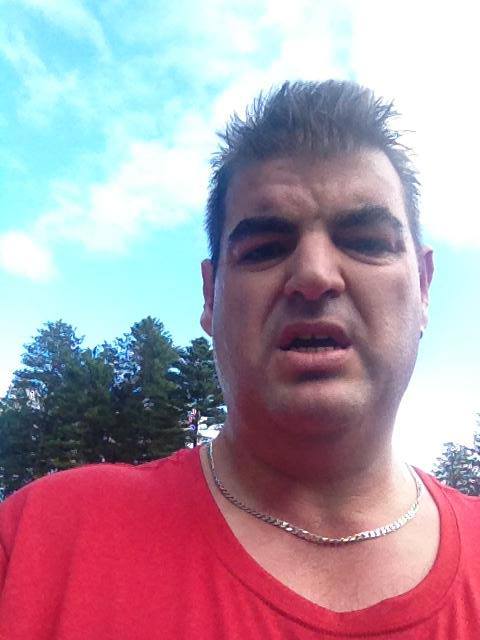
no more mr fat guyBack in the days of no more mr fat guy
Running My Own Race
A year after my first public 10km, I went back to Fremantle with a sub-60 dream, friends around me, a Facebook community watching, and a lesson I still needed: run my own race.

The first time I ran the Fremantle Fun Run, I was trying to prove I could be seen.
That was September 2012. A race bib, Steve beside me, a body that still did not trust running, and a simple goal: finish 10 km in public without walking. I was nervous about fitting in. Nervous about being last. Nervous that the world of proper runners would take one look at me and quietly agree I had wandered into the wrong place.
I finished in 1:14:41.
At the time, that felt enormous. It still does. It was the first public proof that running might, somehow, become mine.
Ten months later, I went back to Fremantle as a very different man.
I had finished the Joondalup Half Marathon. I had finished the Perth Marathon. I had written the post that admitted the marathon had only been a vehicle. The no more mr fat guy page had grown beyond the original circle of friends and family. There were people watching now, people commenting, people whose names and pages I recognised, people I was starting to think of as part of the strange little community forming around this slow-running experiment.
And for the first time, I was not going to an event just to finish.
I was going with a time goal.
That changed everything.
Putting The Number Out There
The sub-60 10 km goal had been sitting quietly in the back of my mind for a while.
Actually, “quietly” is probably a lie. Once a goal gets into my head it tends to start moving furniture around, muttering to itself, and generally making a nuisance of things. But I had kept it private because private goals are easy to manage. If I missed it, nobody would know. If I hit it, I could produce the result with a smug little flourish and pretend I had been calm about the whole thing.
Then, on 22 July 2013, I put it on Facebook.
I really wanted to crack one hour for 10 km at the Fremantle Fun Run.
It was just a fun run, technically. It was also just the long run in week two of a half-marathon training schedule. I had been saying “no expectations” for long enough that I probably almost believed it. But that was not the truth. The truth was that I wanted the number. I wanted to know how much had changed since September. I wanted proof that the bloke who had scraped through 10 km in 1:14:41 could come back and take a serious chunk out of the time.
Shaving fifteen minutes off a 10 km time was a big ask.
But then again, why not?
The moment I posted it, I felt sick. Proper goal-setting still had teeth in it. The old part of me did not like giving people a number because a number can become a stick to beat yourself with. A number can sit there afterwards, blunt and undeniable, saying you did or you did not.
The community did not let me sit alone with that fear.
The messages came back quickly: you can do it, go for it, all the things people say when they are being kind and supportive and have absolutely no intention of running the kilometres for you. It was lovely. It was also terrifying. Support means people believe in you, which is wonderful right up until the bit where you might let them down.
The next morning, I posted the goal in the Facebook event for the Tough Mudder team. Tom, the friend who had somehow lured me into that muddy October stupidity, was part of that. Someone replied that they were comfortable around that pace and would drag me along to 59:00.
There it was.
The public goal now had company.
Race Week Energy
That week already had too much energy running through it.
The July 24 post had opened me up in a way I was still trying to understand. The blog host had fallen over because too many people tried to read it. I had started talking about community sites, story sharing, and taking no more mr fat guy into the real world. My head was full of big ideas, rough plans, personal-development possibilities, and a new sense that running had become more than exercise.
Under all that, the very practical work continued.
The race number arrived in the mail on Wednesday: 3601. A small square of paper or card, nothing dramatic, but race bibs have a way of making an idea become very real. Once the number exists, the event is no longer a vague future thing. It has your name attached. Your body has been summoned.
On Thursday I wrote the week in simple terms: Friday would be a 4 mile run, Saturday a rest day, Sunday the 10 km fun run in 60 minutes or less.
Hashtag: cannot wait.
Friday morning, around 3 am, it was tipping down. I did a two-minute plank, decided to suck it up, and went out for the easy 6.5 km run anyway. The rain stopped almost as soon as I started, because of course it did. The run itself was slow and very good. I needed to take it easy, just get the blood moving, and not push too hard before Sunday.
The oxygen did something to my brain. I came back with a full sheet of A4 covered in ideas for books, manifestos, blog posts, concepts, topics, and whatever else was trying to pour out of me. I started calling that “runspiration”, which was both terrible and accurate.
Saturday morning it was absolutely tipping down again. I was glad the 10 km was the next day and not that morning. Fortunately, the forecast looked better.
There was one other piece of Saturday context: it was our 10th wedding anniversary weekend. By Saturday night the anniversary feasting was done, which is perhaps not the standard textbook approach to chasing a 10 km personal best, but life has never been especially interested in giving me clean textbook conditions. I took a Night Time Rest & Restore multi, made sure my things were ready for the morning, and went to bed dreaming of sub-60.
Marathon Mind, 10k Heart
Race morning felt weird.
Really weird.
Not bad weird. More like nervously excited, or excitedly nervous, depending on which way round the sentence landed at any given moment. The three previous public running events had all had a different emotional job.
The first 10 km had broken the public-running barrier.
Joondalup had proved I could run longer and survive the old mental demons that appeared when things got difficult.
The Perth Marathon had been the summit, and then somehow also the base camp for everything that came after.
This 10 km was different because I was different.
It was the first event since the Facebook page had properly opened up. There were a few hundred more pairs of eyes on the attempt, and a few hundred more pairs of hands ready to type encouragement, jokes, congratulations, or consolation. It was also the first event where finishing was not the point. I was going to Fremantle with a runner’s mindset, or at least something close enough to one that I dared use the phrase.
I wanted data.
I wanted comparison.
I wanted to know what progress looked like when the goal was not survival.
My sleep, naturally, was rubbish. I woke around 2 am, at least two hours before I wanted to be up, eventually got back to sleep, and woke again around 4:40. By then my race-day routine, and I was bold enough to call it that by this point, took over.
Porridge oats.
Toast.
Orange juice.
Black coffee.
Shower.
Shave, because obviously a clean face is more streamlined and would make me faster. Science, probably.
Running gear on.
Bag checked: dry T-shirt for later, protein bar, gels, towel, water bottle, wallet, phone, race bib.
Then I paced around listening to music while I waited for Steve to arrive.
Steve was a little later than expected, and by then the nervous energy was starting to cook me from the inside. The normal conversation in the car helped. It gave the brain something else to hold for the twenty minutes or so it took to get to Fremantle. Not the number. Not the clock. Not the public promise. Just two friends going to a race, as if that was a perfectly ordinary way to spend a Sunday morning.
The Start Area
Steve and I had company this time.
We were meeting Tom and his friend John. Tom was the one responsible for Tough Mudder entering my life, which tells you something about his judgement and mine. The Fremantle Fun Run was serving as a useful little fitness marker for that future mud-based bad decision.
We found Tom almost straight away and chatted while we waited for John. I love the pre-race atmosphere now, which is a sentence 2011 Gary would have found suspicious and possibly upsetting. People milling around. Meeting, greeting, warming up, stretching, collecting numbers, queuing for loos. Even the portable toilet had become part of the theatre of the thing.
I checked the course map and realised it was almost completely different from the previous year’s route.
Fine. Interesting, even.
Then I bumped into Bill from Running from Stroke.
I had mentioned the week before that I was looking forward to shaking his hand at Fremantle, and now there he was, a real human being rather than a Facebook name and page. Bill was running the 5 km with his kids. His story was due to become the next shit-sorter file, and meeting him in person mattered. This was the online running community becoming flesh and voice and handshake. The page had become people.
A few minutes before the start, we went to dump jackets at the car. I took the opportunity to have an energy gel, because my sweet tooth meant I could enjoy the things that many runners treat as barely legal wallpaper paste. Steve asked about it, so I gave him the spare. It was only an hour’s run, after all.
That optimism is charming in hindsight.
We jogged back towards the start area. The body was doing its usual little audit of every ache, every patch of stiffness, every quiet suggestion that staying in bed would have been wiser. But I knew the pattern by then. Once the countdown happened and the blood started moving properly, most of that would disappear.
We were still hanging around towards the back.
This year, though, I knew I would not be stuck there.
Too Fast Again
The countdown happened.
Ten, nine, eight.
I love that bit. Still do.
Then the race began slowly, because there were about 900 people trying to squeeze through a narrow start. For the first few hundred metres there was nothing to do but shuffle and wait for space. That was frustrating because I had a pace in mind, and the early crowd was not interested in my personal narrative requirements.
Eventually the field opened.
Tom, Steve, John and I moved towards the edges and started working past slower runners. At one corner the course narrowed again, so we slipped off the path, onto the actual road for a bit, and kept moving up the field.
It felt brilliant.
I felt brilliant.
The pace was in that “comfortably hard” place that sounds like a contradiction until you have felt it. I was working, but not panicking. I was passing people. Passing people. At a running event. The man who had once worried about everyone going home before he finished was now moving through the field like he had some business being there.
I was not listening to music anymore, which was another change. After the marathon I had started running without needing something in my ears. But the lack of music meant the lack of Runkeeper feedback too, because I was not plugged into the phone. Tom said something about the pace being bang on, and I trusted that for as long as trust seemed useful.
Later, the splits told the truth.
I had gone out too fast again.
The first couple of kilometres were around 5:45 per kilometre, which was not sustainable for me at that stage. But even that mistake contained progress. Being able to run two kilometres at that pace was a massive change. In September 2012, the idea would have been absurd. In July 2013, it was a tactical error.
Progress is sometimes just the quality of the mistakes you are now able to make.
Letting Them Go
After the first couple of kilometres, the others started pulling ahead.
This was the key moment of the day, really.
The loose plan had been that they might drag me around the course towards the 60-minute target. The old version of me would have clung to that plan because it handed responsibility to someone else. If I succeeded, great. If I failed, well, the pacing did not work out. The group went too fast. The plan fell apart. There would have been a little escape hatch built into the story.
Running has a way of making those little escape hatches look ridiculous.
I was in my zone, but I could not hold their pace. So I let them go.
Not in a dramatic way. No heroic music. No slow-motion turning point. I simply accepted that their race and my race were no longer the same thing.
I had to hold my own pace.
Run my own race.
That phrase can sound like generic running advice until your lungs are involved. On that morning, it meant refusing both panic and pride. I could not chase them just to prove I belonged with them. I could not collapse into disappointment because the first plan had gone. I had to make the next sensible decision with the body I actually had.
So I kept moving.
I still thought sub-60 was possible. Their early pace had been ahead of what I needed, and I had banked some fast kilometres. But without Runkeeper in my ear, I was overestimating distances. I did not have the numbers feeding into my head, no regular voice telling me whether to relax or push. I was guessing from course markers, clocks, and feeling.
That was not enough.
But it was what I had.
The Second Lap
The course split at one point: one way for the 5 km runners, another for the 10 km runners.
Lap two.
This was where the effort started to bite.
I felt my pace slipping and, because I did not have the feedback, I assumed it had slipped further than it had. In my head I was drifting back towards the old 7:30 per kilometre territory from the previous year. In reality, I never dropped below 7:08, and I held under 7:00 for nine of the ten kilometres.
But I did not know that at the time.
At the time, I had discomfort, uncertainty, and a number I was trying to protect.
This was a different kind of digging in from the half marathon or the marathon. In those events, digging in had meant keep going, keep plodding, do not stop, get to the finish somehow. This was sharper. This was digging in to hold a pace. To stay inside a goal. To keep pushing even when finishing itself was not in doubt.
That distinction mattered.
I was not fighting to survive the distance.
I was fighting to become better.
The mantra formed itself:
Hold this pace, then finish strong.
Hold this pace, then finish strong.
There were moments where I slipped, felt the discomfort rise, then somehow found another pocket of rhythm. Second wind, third wind, fourth wind, whatever name you give to those little returns. Running at that effort level taught me that comfort is not a fixed thing. Sometimes it is a place you lose and find again by staying patient.
Then came the sign.
2 km.
Beautiful.
Only 2 km to go.
I did the maths quickly and felt the little surge of belief. Even at long-slow-run pace, I had enough time left. The sub-60 dream was still in reach. This was in the bag.
Except it was not.
The sign was the 2 km mark for the 5 km run.
I had 3 km left.
That extra kilometre hit hard. It should not have mattered as much as it did, but the mind had already shifted into “nearly done” mode. Having that taken away felt brutal. Suddenly the long straight section out and back to the finish looked much longer than it had any right to look, and for the first time I felt the 60-minute dream beginning to slip.
No time for that.
Dig deep, finish strong.
Dig deep, finish strong.
The Finish
Bill appeared at exactly the right sort of moment.
He had finished the 5 km and was there as I started the final section, telling me I had about 1.5 km to go. He later said I looked comfortable, which is very kind and also proof that facial expressions can be wildly misleading. A few hundred metres earlier, I had not felt comfortable at all.
But seeing him helped. It snapped me back into the race.
The 60-minute goal was not quite dead in my head. I could still imagine the finish clock coming into view at 59 minutes and something, leaving me a handful of seconds for an ugly sprint and a triumphant collapse. I wanted that image badly enough to keep chasing it after the maths had become suspicious.
The last kilometre took me somewhere new.
Not pain exactly. More like a place where I had to find grit at a different intensity. I was not shuffling home at the end of a marathon. I was trying to keep a hard pace when the body had every reason to negotiate. With 500 metres to go I was truly digging in, pushing forward with a determination I did not recognise as mine.
The final 100 metres were as close to sprinting as I could manage.
Tom caught the finish-line photo.
There I am, red shirt, race bib 3601, coming under the Fremantle Fun Run gantry. The clock says 1:06:21.
Not sub-60.
A personal best.
Both things were true.
The Number I Did Get
There was disappointment, of course.
I had wanted the hour. I had put the hour out there. I had let myself believe in it, and for a good chunk of the race I thought it might happen. Missing it by more than six minutes was not a tiny near miss.
But it also was not failure.
I had improved by more than eight minutes on the previous year. I had run the first couple of kilometres at a pace I would once have considered science fiction. I had run without music. I had passed people. I had held under 7:00 per kilometre for almost the whole race. I had let the others go rather than blowing myself up through pride. I had finished strongly enough that nobody could say I had drifted home without giving it everything.
The first Fremantle Fun Run had asked whether I could be seen.
The second one asked whether I could compete with the person I had been.
The answer was yes.
Afterwards, the peace settled in. I posted that relaxing after a run was a peaceful affair, with a typically unnecessary comparison to substances I was not actually using. That was the post-run calm talking. The body had been pushed, the effort had been given, and the day had found its shape.
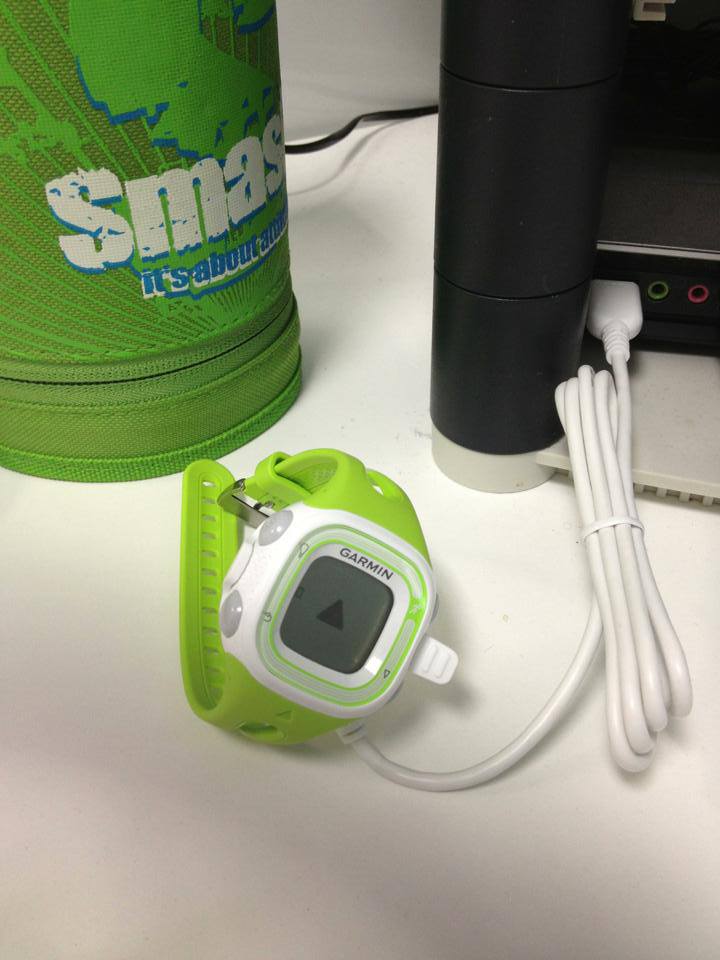
Later, I looked at the official-feeling evidence differently. This was the first time I really understood that I did not miss running with music, but I did miss the stats feedback. The next day, after writing up the race report, I decided it was time to embrace the world of Garmin. My little $2 savings scheme had just paid out. After spending some of it, there was almost exactly enough left for a Garmin Forerunner 10.
A sign, obviously.
The green watch arrived in the story almost immediately. Data mattered because I was no longer only trying to complete things. I was starting to train with intent.
That shift carried forward too. Two days after the race, I used the Macmillan calculator and saw that a 1:06:21 10 km could point towards a sub-2:30 half marathon. That had been an unofficial goal in the back of my mind, so I made it official for 6 October 2013.
Another number.
Another public promise.
What Fremantle Taught Me The Second Time
Looking back, the 2013 Fremantle Fun Run is not one of the giant moments. It was not a marathon finish. It was not the birth of Hearts Across Australia. It was not the kind of chapter that announces itself by changing everything in one dramatic sweep.
But it shows something important.
The transformation was no longer only about becoming someone who could finish.
I was learning to want more from myself without turning that wanting into punishment. I was learning that a missed goal could still be a good day. I was learning that a personal best and a disappointment can sit together in the same result. I was learning that support is wonderful, but responsibility for the effort still has to live inside my own body.
Most of all, I was learning not to hand my race to someone else.
That lesson would matter later.
Across Australia, there would be endless opportunities to wish someone else could carry the hard part. Better logistics. Better timing. Better weather. Better feet. Better certainty. A clearer answer. A smoother day. But movement does not work like that. You can be supported, encouraged, guided, and loved. You can have people beside you at exactly the right moments, as Bill was near the finish in Fremantle and Chris had been near the end of the marathon.
But the pace still has to become yours.
In Fremantle, in July 2013, I missed the number I wanted.
I got something more useful.
I ran my own race.
Images From The Day